Square du Temple
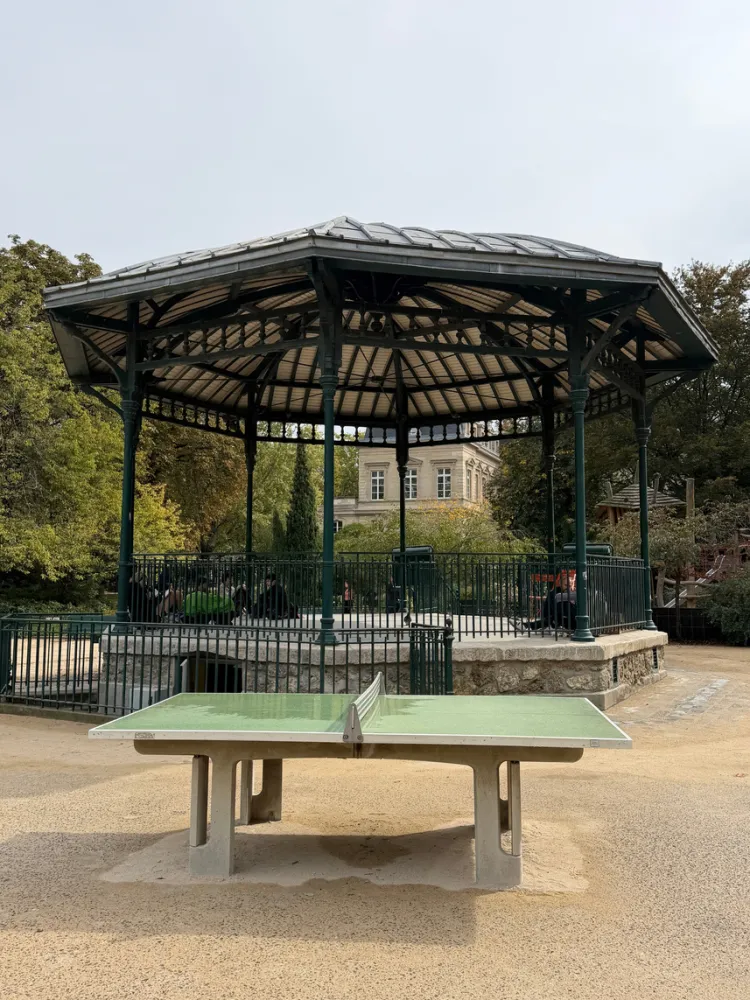
Pause here beneath the trees, and you are standing on ground that shaped this entire neighborhood. The word "Marais" means marsh. For centuries, this low-lying land beside an ancient branch of the Seine flooded periodically, leaving behind a swamp too wet to farm. What you see today exists because of medieval monks and knights: first, the monks of Saint-Martin-des-Champs drained the western edges, and then, in the 12th and 13th centuries, the Knights Templar drained their own land here and turned it into vast vegetable gardens that supplied Parisian markets. Here, on this very ground, the Templars built their fortified European headquarters, the Enclos du Temple. It was a town within a town: a walled compound with towers, a drawbridge, a Gothic church, workshops, and residences, enjoying astonishing privileges, including its own police force, its own justice system, and exemptions from taxes and military service. FROM TEMPLAR TREASURE TO ROYAL TRAGEDY The Templars grew so wealthy and powerful that the kings of France both relied on them and feared them. They guarded and transported the royal family's treasures in times of crisis, but their fortune stirred Philip IV's envy and anger, as the king was deep in debt to the order. In 1307, he ordered the arrest of every Templar in France on a single day, and by 1312 the order had been dissolved by papal decree. Its assets, including this fortress, passed to the Knights Hospitaller of Saint John of Jerusalem. Fast forward to the French Revolution, and this quiet square takes on a darker meaning. The great Templar tower, which stood where you are standing, became the royal family's prison in August 1792. Louis XVI left it on January 21, 1793, bound for the guillotine. Marie Antoinette was moved to the Conciergerie that August and followed him to the scaffold in October. Their son, the boy they called Louis XVII, died in captivity here in June 1795, aged only ten. Those memories haunted this place so much that Napoleon ordered the tower demolished in 1808, hoping to end Royalist pilgrimages to the site. HOW THE MARAIS KEPT REINVENTING ITSELF What is remarkable about the Marais is how it reinvented itself after each upheaval. With the knights gone and the land now habitable, royalty and the nobility moved in, and when Henri IV commissioned the Place Royale, today's Place des Vosges, in 1605, the neighborhood became Paris's most fashionable address almost overnight. Its streets were filled with the grand private mansions, the hôtels particuliers, that still stand today. The Revolution scattered the aristocracy, yet the Marais was largely left alone rather than rebuilt, which paradoxically saved it from Haussmann's bulldozers in the 19th century. Walking the Marais now is an act of cultural archaeology: medieval walls, Renaissance courtyards, and the historic Jewish quarter around Rue des Rosiers, all stacked into a few square miles. Walk to the next stop: Leave the square on the Rue de Bretagne side and head east. The market entrance is a few doors down at number 39. (4 min)
🔒 Unlock 8 more stops